
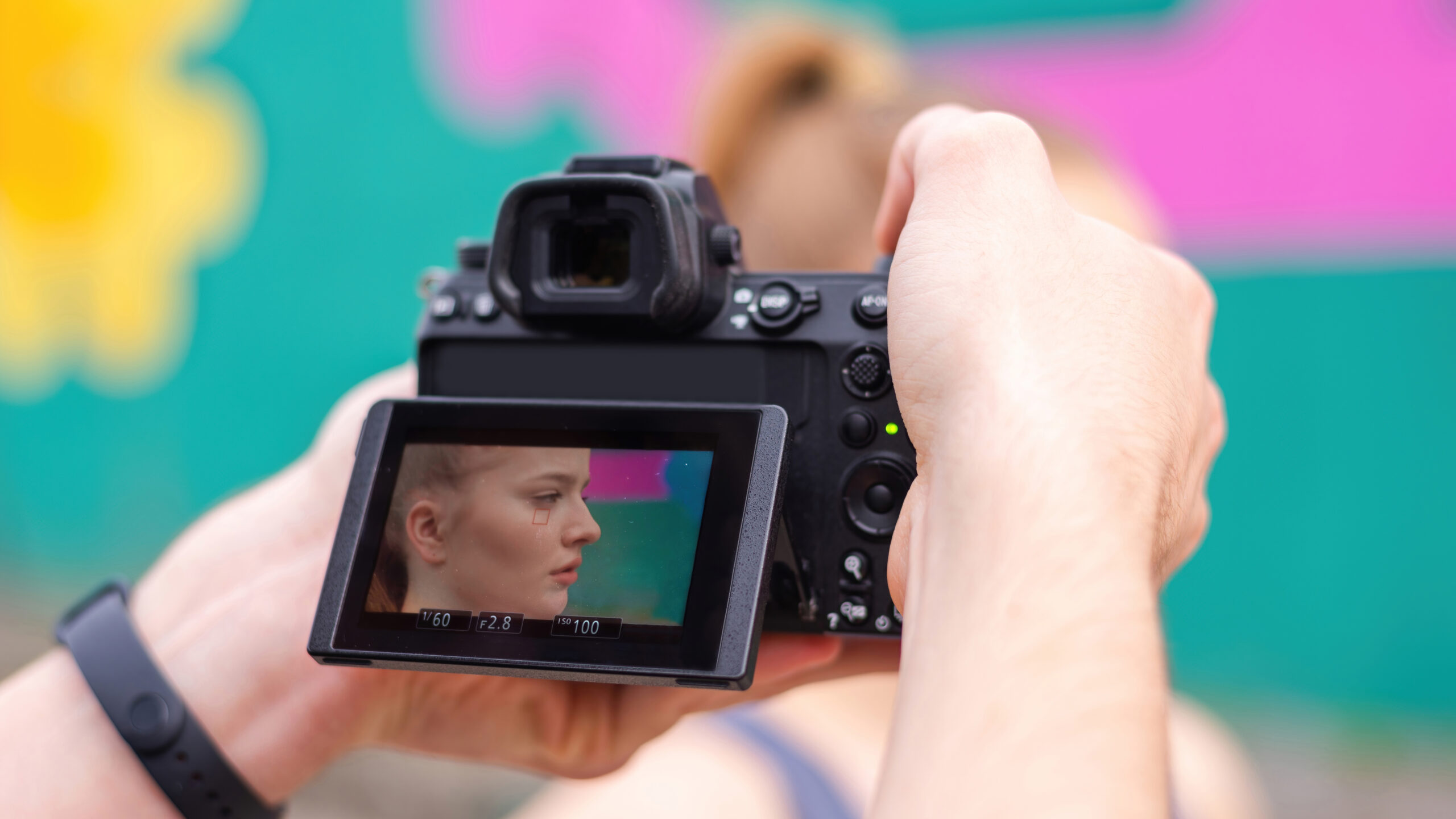
Camera shots and angles control what viewers see, how close they feel to a character, and what they understand about a scene. Shot size sets the frame’s boundaries; camera angle sets the viewpoint. Neither determines the story’s meaning alone.
The 24 choices below cover framing, narrative function, subject relationships, focus, and movement. These are overlapping descriptions, not competing categories: one image can be a medium two-shot at eye level with shallow focus. Each entry explains what changes on screen and when that change serves a scene.
Lens suggestions assume a full-frame camera; the same focal length produces a narrower field of view on a smaller sensor. Perspective depends on camera position, so changing lenses from one fixed position changes framing without changing the relationship between near and distant objects.
1. Extreme Wide Shot
An extreme wide shot makes the setting dominate the frame. A person may appear as a small figure against a mountain, an empty parking lot, or a city block. You can read where they are before you can read their expression.
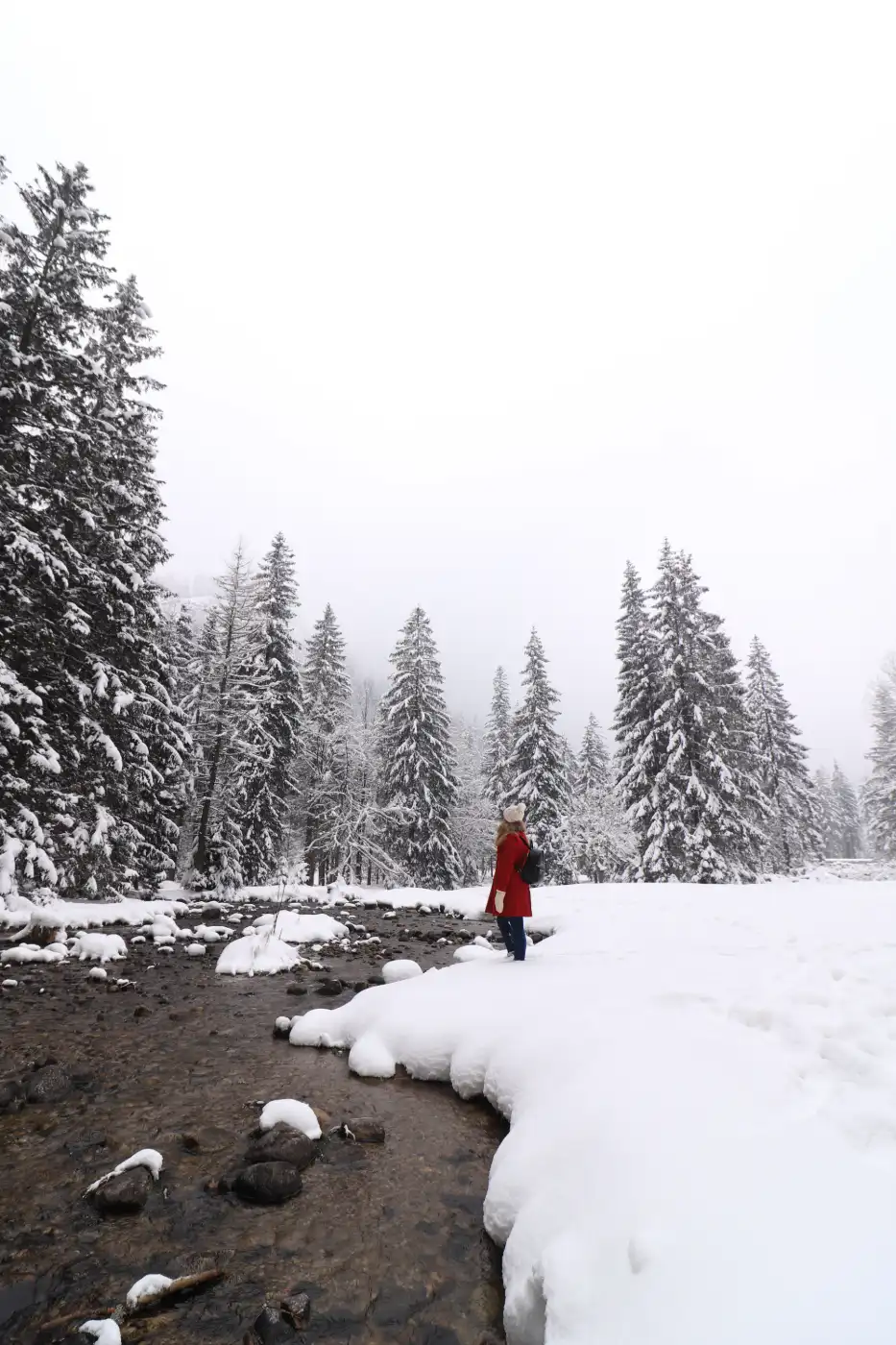
That imbalance can suggest isolation, exposure, or the scale of a task. Keep the important action legible: a red jacket crossing pale snow gives the audience a clear subject even at a distance. If viewers cannot identify what matters, the frame may offer scenery without conveying the intended story information.
2. Wide Shot
A wide shot, also called a long shot, shows the subject with substantial surrounding space. Compared with an extreme wide, the person’s actions become easier to follow while the environment still carries meaning.
A 16–35 mm lens offers useful wide-framing options, depending on your distance and sensor. Moving close with the wider end exaggerates near-to-far size differences because the camera position changes.
The phrase “long shot camera angle” combines two separate ideas: long shot describes framing, while the camera’s height and tilt describe its angle. A wide shot can look upward, downward, or straight ahead.
3. Full Shot
A full shot frames a person from head to feet, with enough clearance to avoid accidentally clipping either end. It makes the whole body readable, which is useful when posture or footwork carries the action.
In a confrontation, the distance between someone’s feet may reveal hesitation before their face does. In a dance scene, losing the feet can remove essential information. Leave room for the movement the performer will actually make; a frame that fits a standing rehearsal may cut off a raised hand during the take. The defining feature is the complete body, not a particular lens.
4. Medium Long Shot
A medium long shot usually frames a person from around the knees upward. You may also hear it called a three-quarter shot; the related cowboy shot traditionally leaves the hip area visible.
This framing balances bodily action with a readable face. It works when someone reaches into a coat or holds an object at their side, because a tighter image could hide the action. Set the lower boundary deliberately instead of letting it land awkwardly on a moving knee. The frame should show the action’s full path, not merely its starting position.
5. Medium Shot
A medium shot commonly frames a person from about the waist upward. It gives gestures room while keeping expressions clear, making it useful for conversations where hands and faces both contribute.
A 35–50 mm lens can provide workable medium framing on full frame, with distance adjusted to suit the space. It is the composition, not that lens range, that makes the image a medium shot.
6. Medium Close-Up
A medium close-up generally frames from the chest or shoulders upward. It keeps some posture visible while giving the face more weight than a medium shot does.
This is useful when a conversation becomes personal but does not yet need the intensity of a close-up. A character can stop gesturing, hold their shoulders still, and let a pause become the event. Watch the lower edge when hands rise toward the face: an important gesture may enter only halfway. Decide whether that partial appearance supports the moment or distracts from it.
7. Close-Up
A close-up isolates a face or another important subject so that small changes become easy to read. On a face, a brief glance away can replace a line of explanation.
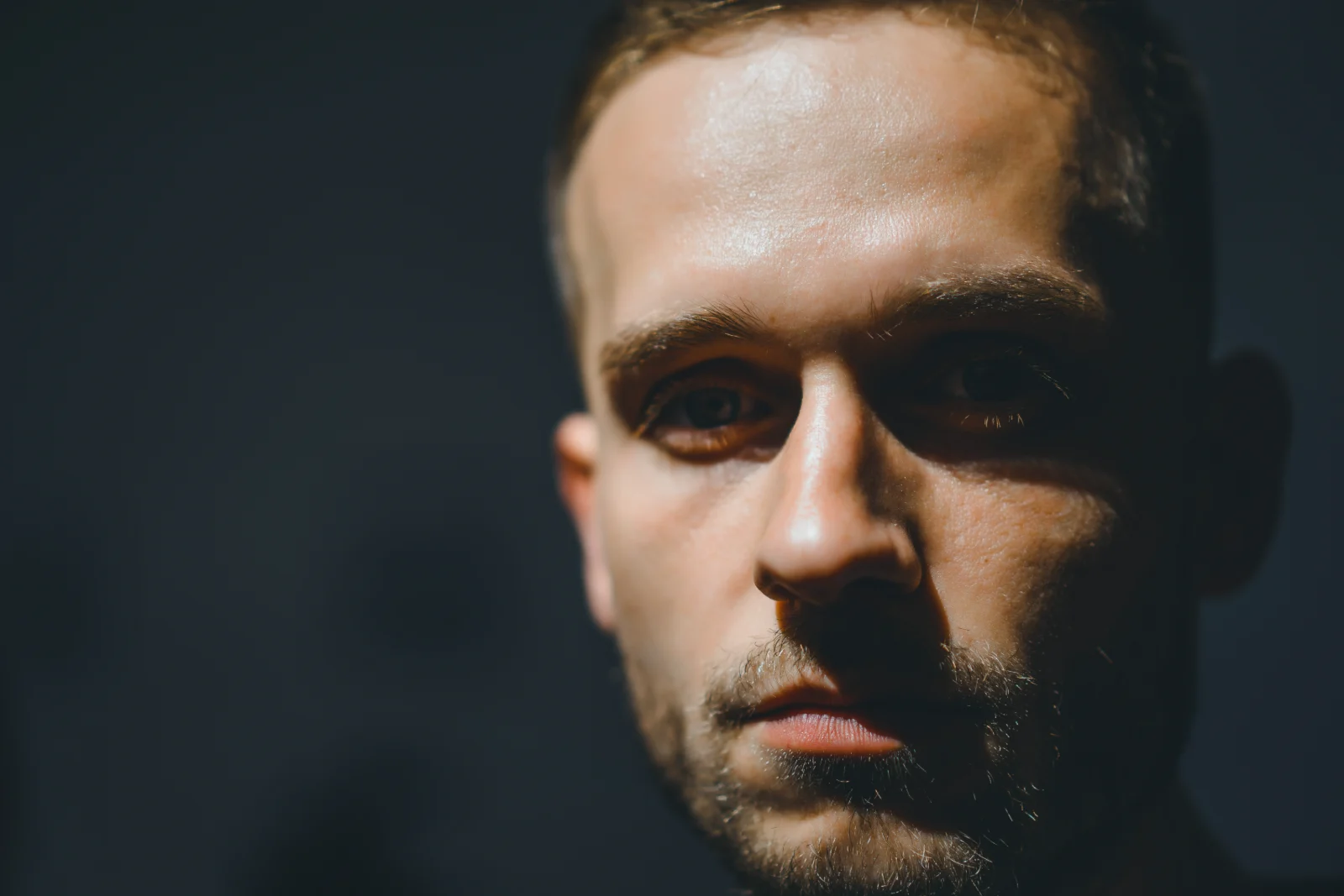
An 85–135 mm lens is one option for facial close-ups when you have room to place the camera farther back. That greater distance changes facial perspective; the focal length alone does not “compress” a face.
Reserve enough screen time for viewers to interpret the reaction. Cutting away before a character’s expression changes can remove the very information the tighter frame was meant to reveal.
8. Extreme Close-Up
An extreme close-up shows a detail within a larger subject: an eye, a fingertip on a trigger, or the teeth of a damaged key. The surrounding object or face may extend beyond every edge.
At this scale, small movements become substantial. A performer leaning forward can move an eye outside the sharp focus plane, so rehearse the action with the actual camera setup.
For very small objects, minimum focusing distance and magnification matter more than simply choosing a long lens. A macro lens allows close focusing that an ordinary telephoto lens may not provide.
9. Establishing Shot
An establishing shot tells viewers where a scene takes place or how its important spaces relate. Its defining feature is that narrative job, not a mandatory framing size.
An exterior of an apartment building can establish location. Inside, a wider view might establish that the kitchen doorway faces the front entrance, preparing viewers to understand someone’s escape route.
Among the types of shots in film, this one is especially easy to confuse with a wide shot. A tight image of a distinctive apartment number can establish a location if the audience already knows what that number means.
10. Two-Shot
A two-shot includes two people in the same frame. Their relative size and placement can make a relationship visible without cutting between separate views.
Put both people side by side and their reactions can unfold simultaneously. Place one near the camera and the other across the room, and their separation becomes part of the composition.
The label says nothing about equal importance. One person can dominate the foreground while the other occupies a small area behind them. Before dividing a conversation into singles, consider whether seeing both responses together makes the exchange clearer.
11. Over-the-Shoulder Shot
An over-the-shoulder shot looks past one person toward another, usually retaining part of the nearer person’s shoulder or head. That foreground presence anchors the conversation in shared space.
Its size matters. A large, dark shoulder can crowd the person being watched; a small foreground edge can preserve the relationship without adding much pressure.
For conventional dialogue coverage, keep the camera on a consistent side of the action axis so the speakers maintain opposing screen directions. Crossing that axis can make them appear to face the same way unless the scene clearly reorients the audience.
12. Point-of-View Shot
A point-of-view shot presents what a character is looking at from approximately their visual position. A glance toward a doorway followed by a view through that doorway gives viewers a clear connection between observer and image.
The camera does not have to imitate every natural head movement. Excessive sway can obscure the information the character supposedly notices.
Distinguish literal viewpoint from emotional alignment: a close-up of someone feeling frightened keeps us with them, but it does not show their optical perspective. A point-of-view image shifts the audience into the place from which they see.
13. Eye-Level Angle
An eye-level angle places the lens approximately at the subject’s eye height. For a seated person, that usually means lowering the camera from the position used for a standing adult.
This viewpoint often feels direct because viewers meet the subject without an obvious upward or downward look. It does not guarantee neutrality; lighting and performance can still make the encounter threatening.
Eye level also depends on whose experience matters. Filming an adult from a child’s eye height changes the relationship even when the camera remains level. Choose the reference person before setting the tripod.
14. Low Angle
A low angle looks upward at the subject. It can emphasize height or reveal features that disappear from a level view, such as a ceiling looming above someone.
Power is one possible reading, not an automatic result. A person filmed from the floor while struggling to reach a locked window may look vulnerable because the action establishes their disadvantage.
Watch the background as you lower the camera. An ordinary ceiling light can become a distracting shape beside the subject’s head. Different camera angles change the surrounding geometry as well as the person’s appearance.
15. High Angle
A high angle looks downward at the subject. It can expose the arrangement of a room, make a person appear small within their surroundings, or show an action hidden from a lower viewpoint.
For example, looking down at a desk can reveal that a character is concealing a letter beneath an open notebook. The practical information may matter more than any suggestion of vulnerability.
Keep the distinction between camera height and camera tilt clear. A camera mounted high but aimed horizontally is not necessarily giving you the downward view associated with a high-angle shot.
16. Overhead Shot
An overhead shot looks almost straight down, creating a bird’s-eye arrangement of people and objects. It emphasizes paths and spacing while reducing the prominence of faces.
A dinner table viewed from above can make an empty place setting immediately obvious. An overhead view of a hallway can show two people approaching an intersection before either sees the other.
You can achieve this with a securely rigged camera, a jib, or a suitable elevated position; a drone is only one tool. Any equipment suspended above performers requires appropriate support and qualified rigging. An improvised mount is not a safe substitute.
17. Dutch Angle
A Dutch angle rolls the camera around the lens axis so that vertical lines appear slanted. It differs from looking upward or downward: the frame itself feels off balance.
The Third Man (1949) provides recognizable examples of canted compositions supporting a world of suspicion and instability. The effect works through its relationship with the scene, not through slant alone.
18. Deep Focus Shot
Deep focus keeps important subjects at different distances acceptably sharp within the same image. Viewers can examine the foreground and background without waiting for a cut or focus change.
Citizen Kane (1941) is a key example of deep-focus staging. In the childhood boarding-house scene, young Charles remains visible outside while adults discuss his future indoors, connecting separated actions within one composition.
Achieving this look involves aperture, focal length, focus distance, and available light. A smaller aperture can increase depth of field, but the composition must still direct attention. Equal sharpness does not make every area equally important.
19. Shallow Focus Shot
Shallow focus keeps a limited depth range sharp while other distances fall visibly out of focus. It can separate a face from a busy background or keep an approaching figure indistinct.
A wider aperture can reduce depth of field. Moving closer also affects it, so a close-up may leave little room for a performer to shift without losing sharpness.
Keep blur meaningful. If viewers need to read a sign behind the actor, hiding it defeats the scene’s information. Shallow focus differs from soft focus, which reduces crisp detail through optical design or diffusion instead of simply isolating a sharp distance plane.
20. Rack Focus Shot
A rack focus deliberately shifts sharpness from one distance to another during a shot. A clear foreground face might become blurred as someone in the background comes into focus.
That change transfers attention without changing the frame. It can reveal that a listener has noticed something the speaker has missed, allowing the audience to discover it at the same moment.
Mark both focus distances and rehearse the timing with the performers. A follow-focus system can help make the pull repeatable. Lens breathing, where framing changes slightly during focusing, may become noticeable in an otherwise motionless composition.
21. Static Shot
A static shot keeps the camera’s position and orientation fixed. The action can still be energetic: a performer may cross the frame or approach until a wide composition becomes a close-up.
A tripod provides a stable base, but locking the camera does not remove the need to compose entrances and exits. Decide where the empty space will become important.
A zoom lens offers a separate option: changing focal length tightens or widens the view without moving the camera. A zoom changes framing, while moving the camera changes perspective. A zoom performed from a fixed position is therefore not the same visual action as a push-in.
22. Pan Shot
A pan rotates the camera left or right from a fixed position. It can follow a person across a room or reveal something outside the original frame.
Give the move a reason to begin and a useful place to end. Following someone toward a doorway might finish on the person waiting beyond it, turning a simple movement into a disclosure.
A fluid tripod head helps control the rotation. Excessively fast panning can produce motion blur or rolling-shutter distortion, depending on the camera and settings. Test the intended speed against the actual background, especially when strong vertical lines fill the image.
23. Tilt Shot
A tilt rotates the camera upward or downward while its position stays fixed. Tilting from muddy shoes to a formally dressed face can disclose a contradiction gradually.
The pivot distinguishes a tilt from pedestal movement. A pedestal move raises or lowers the camera’s position, often keeping its orientation level; that displacement changes the viewpoint and foreground-background relationships.
Choose between them based on the reveal. Tilting up a tall building emphasizes looking along its height. Raising the camera past a barrier can uncover something that rotation from the original position could never see.
24. Tracking Shot
A tracking shot moves the camera through space to follow, approach, or travel alongside action. Unlike a pan, it changes camera position and the relationship between objects at different distances.
The Copacabana entrance in Goodfellas (1990) is a sustained tracking-shot example: the camera accompanies Henry and Karen through the club’s service areas into the dining room. The route communicates access and status through uninterrupted movement.
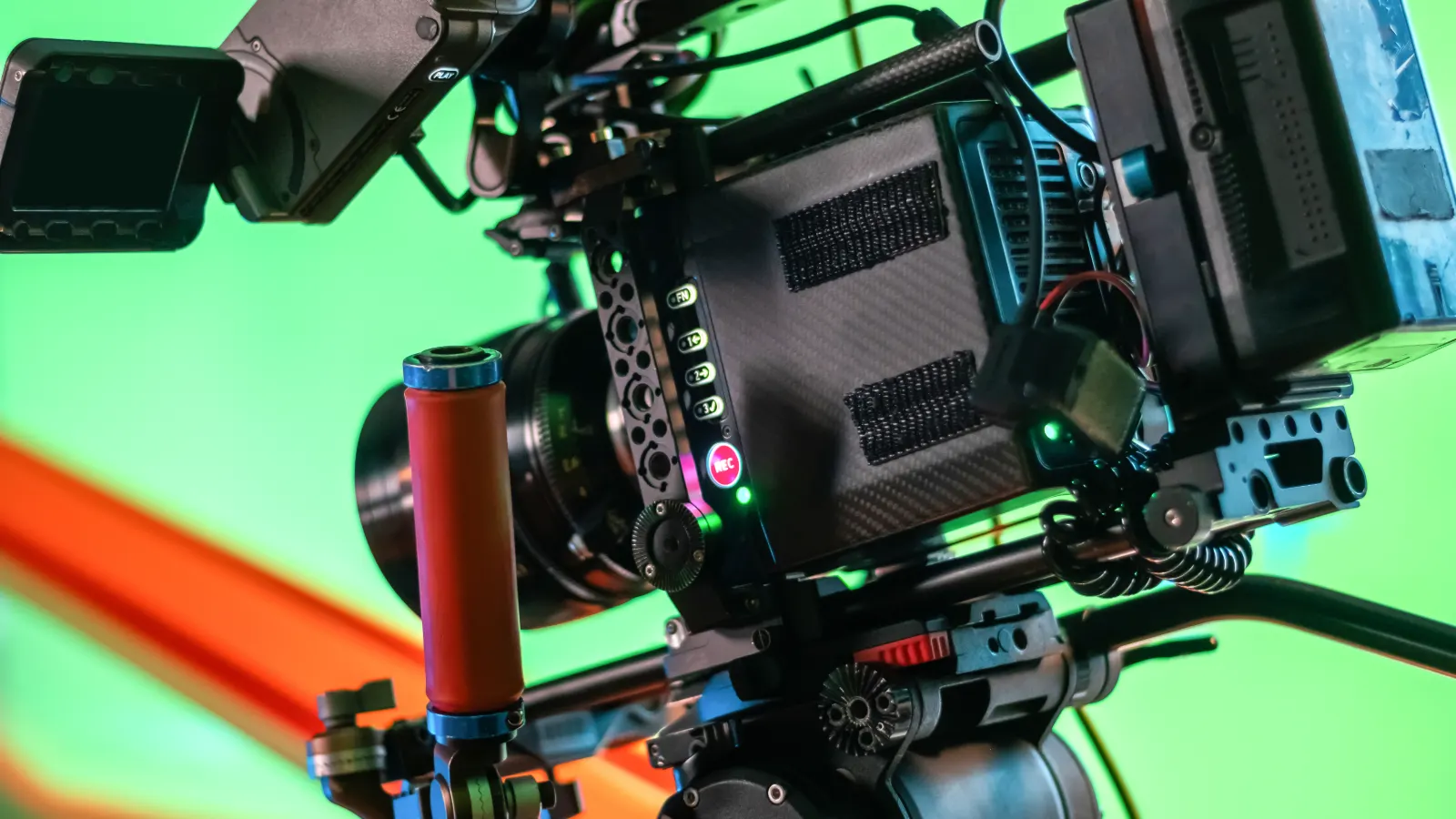
A dolly runs on wheels or track; a Steadicam uses a body-supported stabilization system, while a three-axis gimbal stabilizes rotation electronically. Choose equipment for the route and desired feeling. Tracking can also be handheld when visible camera movement suits the scene.
Key Takeaways
- Shot size describes framing; angle describes the camera’s relationship to the subject.
- Establishing shots orient viewers through their narrative function, not one mandatory size.
- Subject count, viewpoint, and focus describe different aspects of the same shot.
- A pan rotates the camera; a tracking shot moves its position.
- Combine framing, perspective, focus, and movement around the scene’s storytelling needs.
Frequently Asked Questions
Can a close-up also be a low-angle shot?
Yes. Place the camera below the subject’s eye line, aim upward, and frame tightly enough to make the face the main subject. The two labels describe different aspects of the resulting image.
Does an establishing shot always need to be wide?
No. A recognizable detail, such as a building’s distinctive entrance, can orient viewers without showing the entire location. What matters is whether the image supplies the spatial or location information the scene needs.
Is an overhead shot necessarily filmed with a drone?
No. For a tabletop scene, a properly secured overhead camera support may be more practical than an aircraft. Drones become useful when the required viewpoint extends beyond a suitable ground-based setup.
Can a two-shot use shallow focus?
Yes, although the actors’ distances from the camera determine whether both remain sharp. Placing their eyes near the same focus plane can keep both readable; separating them in depth lets you favor one person.
What should a storyboard label include besides the shot size?
A storyboard label can specify the angle, subject placement, intended action, and any camera or focus movement. In the shot list, add a shot identifier and practical details such as required support equipment. Use arrows to distinguish subject movement from camera movement.
Does a low viewpoint always make a character look powerful?
No. A low camera can show someone falling, cornered, or overwhelmed by the space above them. The action and surrounding composition establish how the viewpoint should feel.
Choose the Frame Your Scene Needs
Choose your first setup by identifying what the audience must understand at that moment. A full shot can make footwork clear; an extreme close-up can expose the damaged key that stops an escape. Use that information to decide how much surrounding space belongs in the image.
When comparing different types of shots in film, separate framing from viewpoint and movement. You do not need a new setup for every label, and using more types of shots will not automatically improve a scene. Sketch the essential action, then record the camera position and focus changes it requires. If a stationary medium shot carries the exchange clearly, shoot it with purpose. Add another view when it contributes information the first cannot.
